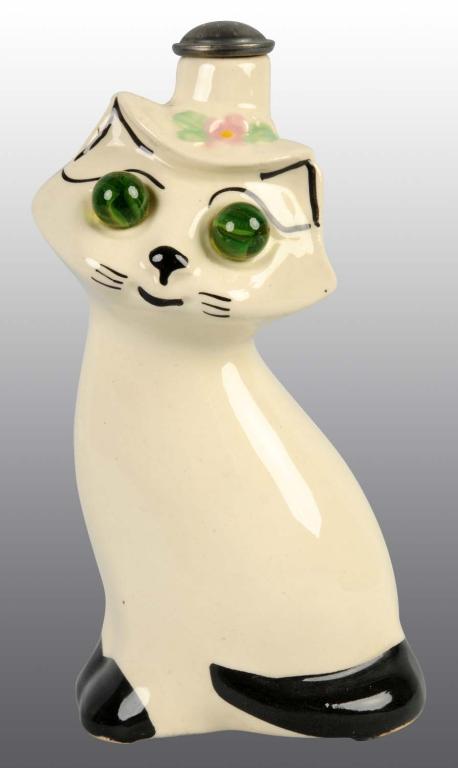
Porcelain ironing sprinkler bottle, black and white cat with green marble eyes

Ironing sprinkler bottle, cat with green marble eyes; image courtesy of Morphy Auctions

Morphy Auctions October 2009 sale will be held the 8th, 9th, & 10th in Denver, Pennsylvania. 500 washing-related items from the Shapiro Collection will be sold including vintage washing machines, clothespins and approximately 30 porcelain ironing sprinkler bottles.

Having fallen out of use with the invention of the steam iron and plastic spray bottles, sprinkler bottles were filled with water and used to dampen clothes before ironing. Often a Coke bottle was used with a special sprinkler cork top, but decorative bottles were also produced especially for sprinkling. My own mother recalls my grandmother sprinkling bed sheets and my grandfather’s shirts. She would them roll them up and put them in the basement refrigerator so they wouldn’t mildew and the water could diffuse evenly. Later she took them out to iron resulting in perfectly wrinkle-free clothes! Sprinkler bottles came in many fun and now collectible forms- animals such as cats, elephants, roosters, human forms like this weary housewife, as well as other forms like this iron-shaped bottle.

Search all upcoming auctions.

-Jennifer Castle, Editor, p4A.com
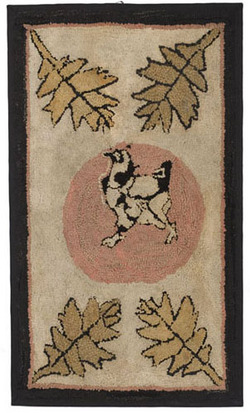
Hooked rug depicting a black and white hen

Hooked rug depicting a black and white hen

September is National Chicken Month!  September is also National Be Kind to Writers and Editors Month, so we’ll see if that gets me anywhere.  It’s also Shameless Promotion Month, so I get a pass for mentioning that.  I don’t make this stuff up, I just write about it.  Anyway, we have plenty of chickens for you to appreciate!

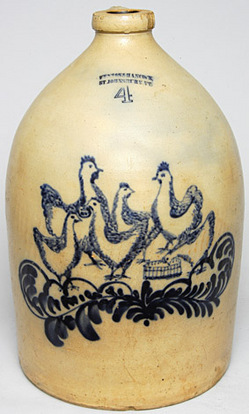
Fenton & Hancock stoneware jug with chicken decoration

There’s actually a lot to appreciate about chickens – even if you don’t eat them.  They’re a portable source of nutritious eggs, they allowed women to achieve financial independence via egg money, they’re good company, and they make great decoration!  Chickens have always been appreciated, and as a result, they show up as decoration on any number of 19th-century objects.  You’ll find chickens as decoration on all sorts of household items, from plates to stoneware to hooked rugs (like the one pictured above).  I especially like this stoneware jug with multiple chickens, and apparently, so do collectors, because it sold for $36,000!  All sorts of things are made in their image, too, including mechanical banks and perfume bottles, but my personal favorite is the carousel chicken.  Who doesn’t want a 2-foot chicken with a leather saddle?!

-Hollie Davis, Senior Editor, p4A.com

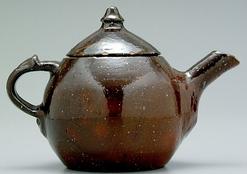
Jugtown teapot having medium to dark brown glaze

Jugtown teapot having medium to dark brown glaze

Aside from new notebooks, my favorite thing about cool fall mornings is a mug of tea.  The joy of choices each morning – formosa oolong or Barry’s Gold, milk or sugar – and the restorative powers of a fragrant cup of caffeine.  I’m a junkie.  I can admit it, and I am clearly not alone based on the amount of tea paraphernalia in the database!  From small and simple teapots like the one pictured above to large and elaborate tea sets, there are plenty of options.  The choices aren’t just limited to tea!

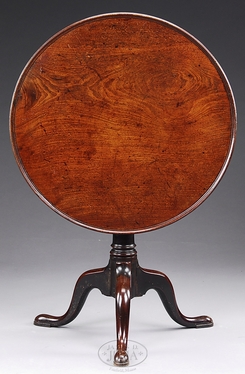
Queen Anne 18th century mahogany tea table

Queen Anne 18th century mahogany tea table

As teapots go, you can have pewter, silver, Meissen, Doulton, Hull, Fiesta and many more, while you strain your tea with enamel, coin silver, sterling silver or Nippon strainers.  You can store your tea in a variety of tea caddies, from walnut to mahogany to tortoiseshell to silver, and tea can be served on Chippendale, Queen Anne, George III and Arts & Crafts tables.  The good news is that many small tea-related items are very affordable, so go ahead and throw yourself a little tea party.  Add some ceremony and style to your daily dose of caffeine!

-Hollie Davis, Senior Editor, p4A.com

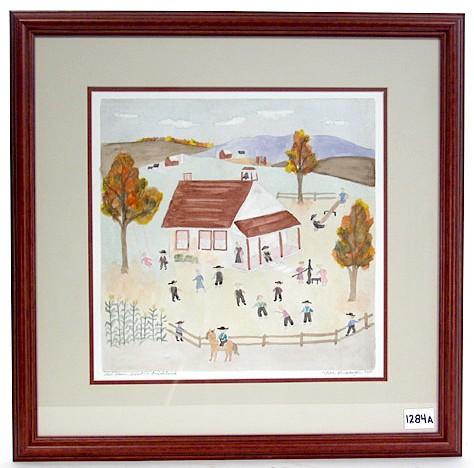
Xtian Newswanger limited edition etching, One Room School in Amishland; image from Yorktown Auctions

Xtian Newswanger limited edition etching, One Room School in Amishland; image from Yorktown Auctions

Ah, the days of autumn leaves, sharpened pencils and new notebooks are upon us.  Of course, getting outfitted for school these days means expensive backpacks, gel pens and notebooks of a different kind!  Still, in the p4A database, you can reassemble a classic one-room school – straight from the pages of Laura Ingalls Wilder or from your own memories!

First, you’ll need a schoolmaster’s desk, and we certainly have an assortment.  Ring the school bell, and students can file in with their lunch pails and take their seats.  You can select readers and primers for your pupils, teach geography with your pointer and a wall map, and allow them to practice their lessons on their slates.  You can all have lunch around the schoolroom stove.  Of course, just in case it’s not as idyllic as the school pictured above, you might want to bring your ruler!

-Hollie Davis, Senior Editor, p4A.com

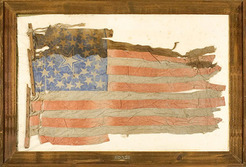
A 36-star glazed cotton American National Parade Flag; image courtesy of Cowans Auctions, Inc.

A 36-star glazed cotton American National Parade Flag; image courtesy of Cowan's Auctions, Inc.

Interested in becoming a vexillologist?  (That’s your word for the day – use it three times in a sentence.)  A vexillologist, just in case someone doesn’t know, is a student or a collector of flags.  And the p4A database has flags out the ears – hundreds of them, so look no further!

From political flags dating from the campaigns of Clay, Lincoln, Grant and McKinley to American flags from 13 stars to 52 (yes, 52), flags often draw big crowds and big bucks.  Determining what makes a flag rare and valuable is a little tricky, but early handsewn examples with unusual patterns are often popular.  Flags made from unusual materials, such as a crocheted flag, a Navajo woven one or a crib quilt flag, can also cross over and appeal to the folk art market.  And condition isn’t everything – the bedraggled example pictured above still sold for over $1000!

-Hollie Davis, Senior Editor, p4A.com

« Older entries § Newer entries »