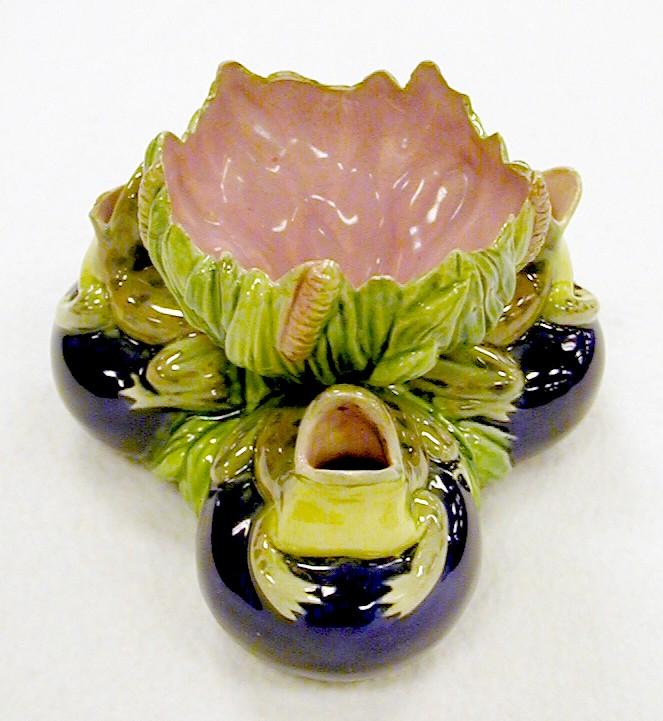
Copeland triple frog spill vase having cobalt bulbs

Copeland triple frog spill vase having cobalt bulbs

Man may have mastered fire millennia ago, but until fairly recently, historically speaking, fire and fire-tending have involved a great deal of equipment and attention.  As with many things, we tend to take for granted providing light and heat, illuminating a page, heating up a meal, achieving an accurate temperature to bake bread, but getting a fire started wasn’t always so easy.

Especially after oil lamps and gas lights started to become more common in homes, offering a steady source of a small flame, household mantels began to sport objects known as spill vases.  “Spills” were twists of paper, longer than today’s kitchen matches, that were intended to burn long enough to transport flame from lamp to fireplace and to allow the lighter to reach far enough into the fireplace to light a fire.  Spill vases, since they were typically intended for a home’s more public rooms and/or were in a position of display on a mantel, are typically very decorative, often some sort of ceramic form with paint decoration.  Staffordshire made thousands of them in just about every imaginable form, from courting couples to hunters, whippets to elephants.

Spill vases should not be confused with match holders, which are smaller containers, often of a later manufacture, although often every bit as decorative as spill vases.  Usually manufactured as small, individual or connected double containers, match holders come in a variety of forms, from simple glass containers to figural ones in all sorts of shapes.  (This one with a figure of a small boy putting on his socks is particularly cute.)  Forms like boots or shoes were popular, but many are in animal or insect form: flies, owls, a donkey hauling baskets.  Match holders are also occasionally found with several other small containers meant for use as a smoking set that is designed to hold cigarettes and other tobacco-related paraphernalia.  Smoking sets, often manufactured by the same companies that sold desk sets, like this gleaming example from Tiffany, can be elaborate, beautifully decorated objects.  Both spill vases and match holders occasionally utilize some natural design in order to create a design with multiple holders, like the terrific Majolica spill vase with frogs and lilypads pictured above.

We’re up to our ears in match holders at the moment, after a recent specialty sale by Whalen Auction of over 550 match holders from a single owner’s collection, so there are certainly many examples in the database.  A category/type search in the Prices4Antiques database for “kitchen and household”/”match holders” will show you the most recent examples, including the ones from this incredible sale!

-Hollie Davis, Senior Editor, p4A.com
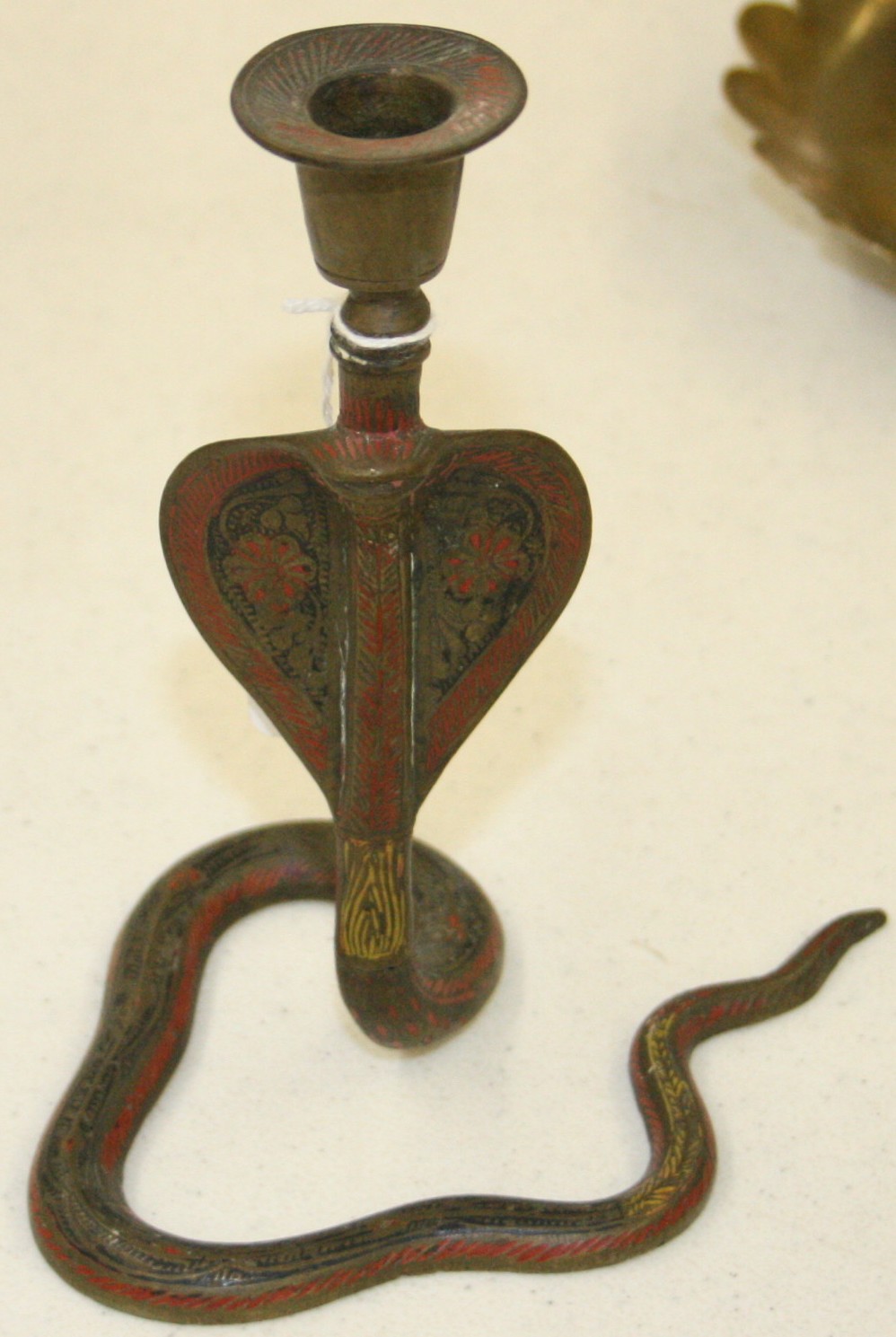
Cobra snake brass figure candlestick

Cobra snake brass figure candlestick, sold at Whalen Auction, April 2010

A single-owner collection of antique lighting sold on April 15, 2010, by Whalen Realty & Auction, Ltd. The sale was held at the company’s auction gallery in Neapolis, Ohio. The cataloged auction featured approximately 390 lots that were sold without reserve. There was no buyer’s premium.

A relatively sparse crowd of roughly 40 bidders participated from the floor, competing against a fair number of absentee bidders.

The seller, an Arkansas collector in his 80s, passed the goods to a younger generation of buyers. “He decided to sell what he had, and he didn’t care what it brought,” said auctioneer John Whalen.

Prices were mixed throughout the day. “The good stuff brought good money, and the other stuff you could hardly give away,” he noted.

-p4A.com contributing editor Don Johnson

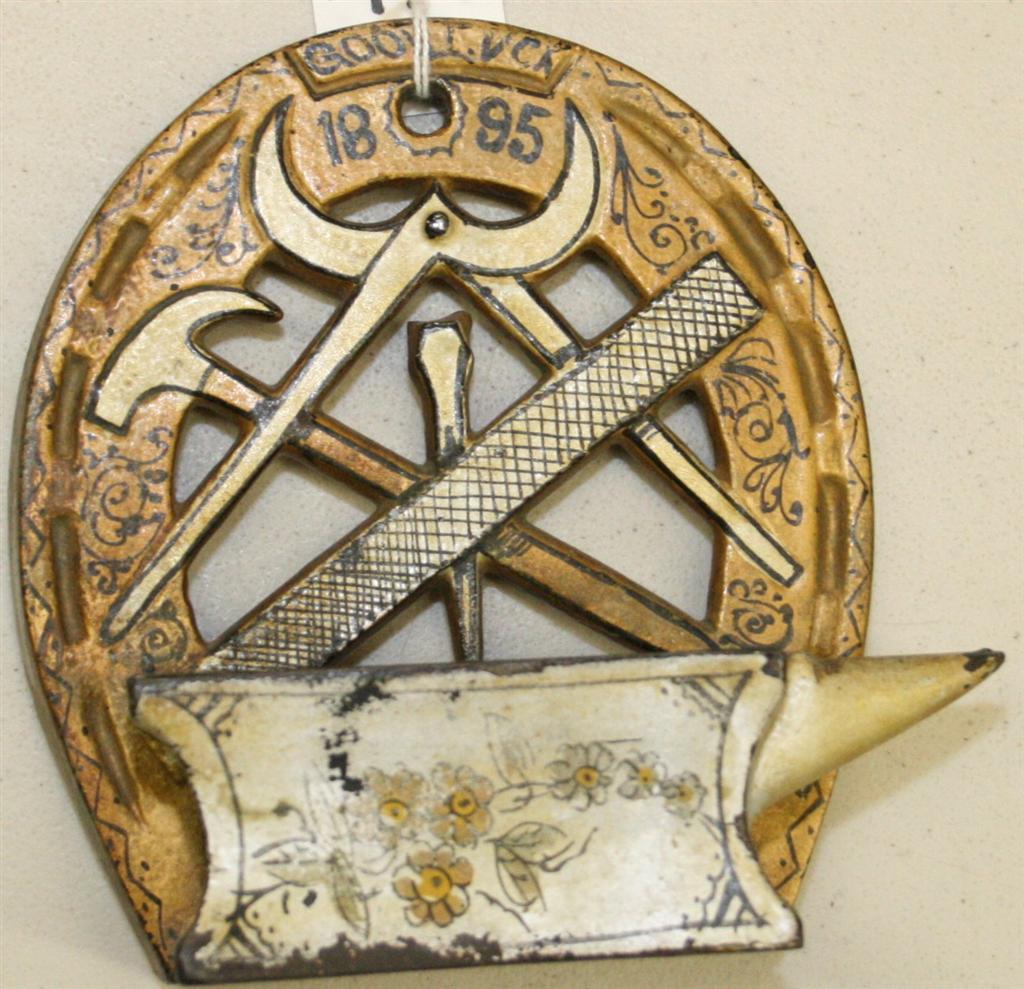
Cast iron Horseshoe match holder, Good Luck 1895

Cast iron Horseshoe match holder, Good Luck 1895, sold at Whalen Auction, April 2010

A single-owner collection of match holders put together over a 45-year period was sold on April 15, 2010, by Whalen Realty & Auction, Ltd. The sale was held at the company’s auction gallery in Neapolis, Ohio.

The cataloged auction featured approximately 570 lots that were sold without reserve. There was no buyer’s premium.

A relatively sparse crowd of roughly 40 bidders participated from the floor, competing against a fair number of absentee bidders. The seller, an Arkansas collector in his 80s, passed the goods to a younger generation of buyers. “He decided to sell what he had, and he didn’t care what it brought,” said auctioneer John Whalen.

Prices were mixed throughout the day. “The match holders brought a lot of activity and a lot of interest.” Whalen noted that the better examples brought more than he expected. “The rare ones went above the price and the cheaper ones went below.”

-p4A.com contributing editor Don Johnson

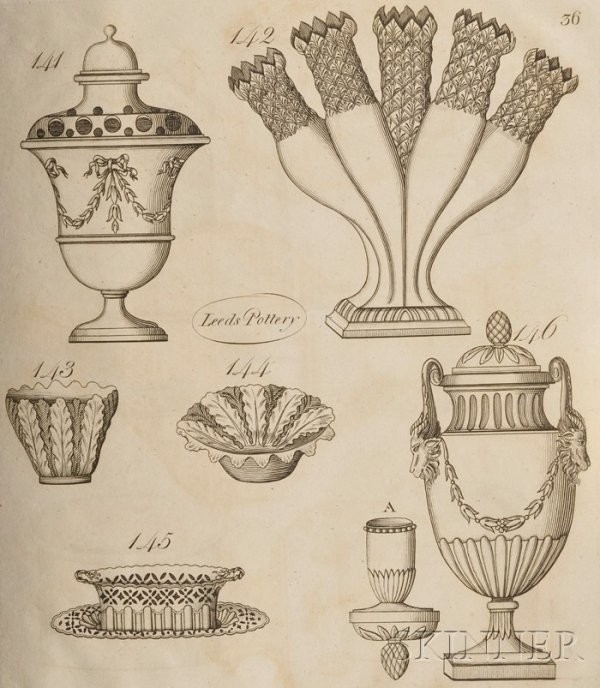
Leeds Pottery Trade Catalogue

Leeds Pottery Trade Catalogue

Thank goodness for online shopping, which is the only thing that stands between me and an annual deluge of mail-order catalogues.  They tend to pile up along with my intentions to look through them (and actually start holiday shopping early) before I finally give in and recycled them.  Of course, they’re ephemera; that’s what’s supposed to happen to them.  It’s hard to imagine, but who knows how valuable these catalogues might be to future generations of researchers seeking for information on how we spent our money, decorated our homes, chose our prize possessions?

Catalogues are some of the best resources we have when researching material culture history.  Census records, probate files and wills may all help tell us where people lived and what they owned, but when it comes to getting a clearer picture of exactly what those objects looked like and how much they might have cost, catalogues are crucial.  Curious about how many kinds of parasols you’d have been able to choose from?  You can browse through a catalogue!  For people interested in the larger picture of trade routes, style influences and the wages and costs associated with manufacturing, catalogues also help fill in gaps.  Looking through old catalogues with images like the Leeds pottery catalogue, pictured above, can tie an object to a particular maker, thereby making it more valuable monetarily or academically, and in some instances, as is the case with the catalogue from the International Exhibition of 1862, it’s possible to positively identify and verify a unique object while piecing together more of its history like those produced for display at the Exhibition.

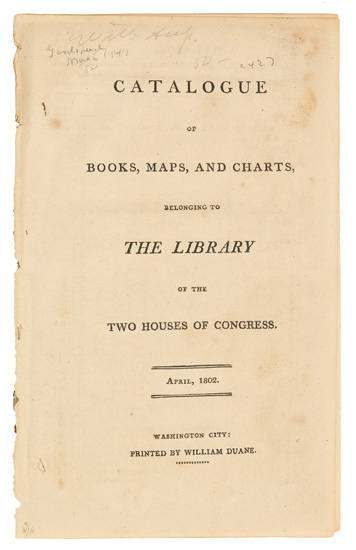
The first catalogue of the Library of Congress

The first catalogue of the Library of Congress

You’ll find catalogues for everything from early twentieth-century Coca-Cola advertising campaigns to movie poster catalogues designed to help theater owners to select their promotions to nineteenth-century catalogues of American Indian photographs taken by some of the great Western photographers.  (It’s not a commercial catalogue, but I can’t talk about catalogues without sharing this first printing of the Library of Congress’s catalogue – it’s 10 pages!)  Catalogues and other such ephemera can have great value not just with historians but with collectors as well, especially those with complete collections who want to round them out with documentation, so check the database if you’re cleaning out an old workshop or office.  And meanwhile, think of the possible future rewards the next time you’re beating yourself up for still having that stack of outdated catalogues piled up on the back of your desk.  Remember that while the modern world may chastise a pack rat, historians everywhere bless the pack rats of bygone eras every day!

See all Ephemera > Catalogues in the p4A database.

-Hollie Davis, Senior Editor, p4A.com
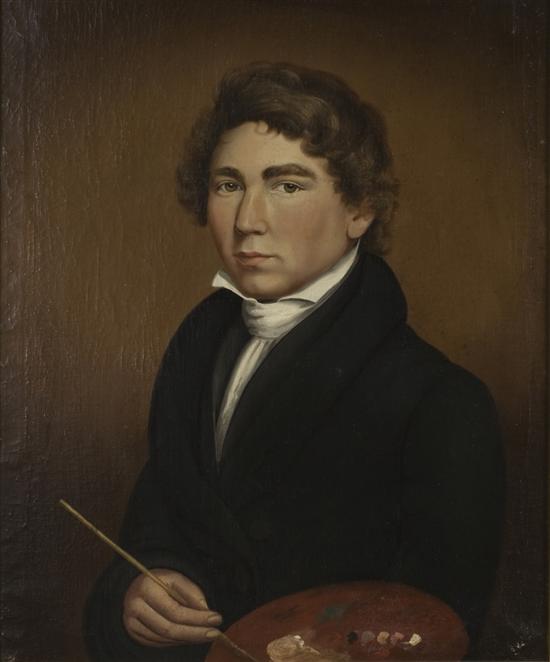
William Matthew Prior, only known self portrait

William Matthew Prior, only known self portrait

Portraits are everywhere at auction, some beautifully executed while some lead to serious questions about the artist’s abilities (or the sitter’s appearance), but they can be a “hard sell.”  While not everyone may want what auctioneers sometimes call “instant ancestors,” at one time, portraits were a mark of status.  As the American middle class began to emerge during the Victorian era, portraits became one of those marks of respectability that upwardly-mobile families sought to possess, and in the days before the daguerreotype was widely available and widely affordable, portraits were very desirable and in considerable demand.

William Matthew Prior, son of a Bath, Maine shipmaster, is one of a number of portrait artists who found their fortune, or at least their living, painting quick, affordable likenesses for a demanding patronage.  Prior’s portraits, mostly unsigned, are characterized by a flatness with simplistically-outlined figures and little or no background decoration. This distinctive style had the added practicality of being quick and thus cost effective.  He actually advertised that he could create a credible likeness in just one hour. (For more information read our entire reference note on Prior here.) Prior made his way down the New England coast to Boston, where he settled in 1839 and remained, busily painting portraits until his death in 1873.  He continues to confound scholars today as many of his works are unsigned and his style varies greatly, likely based on how much money and time he was expecting from a commission.  As a result, many similar works have been attributed to the Prior-Hamblen School (Sturtevant Hamblen was another portrait artist and Prior’s brother-in-law), an attribution that must always be closely questioned because of the potential profit associated with linking a portrait to the Prior name.  Prior’s self-portrait, pictured above, was a recent auction offering (sold at Keno Auctions), and another piece in the puzzle to learning about this enigmatic man.

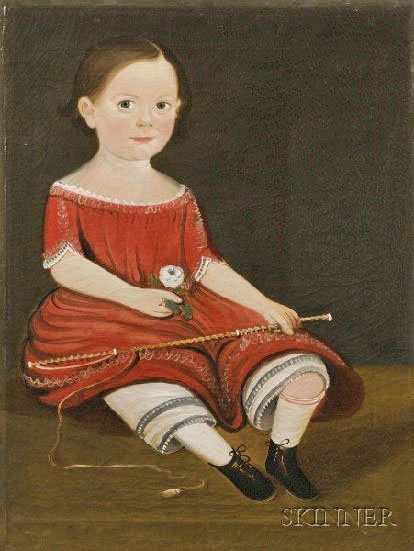
William Matthew Prior oil painting, Portrait of a Young Boy

William Matthew Prior oil painting, Portrait of a Young Boy

Prior, like many other artists of the era, often, as necessity demanded, took his talents on the road.  Itinerant portrait artists were common in early America, particularly throughout the late eighteenth and early nineteenth centuries, and they would travel from one small town to another, staying long enough to rent a room for a few days, spending some change to place an ad in the local newspaper, and then moving on again as business began to slow.  This constant movement over what were sometimes large regions when coupled with the fact that many portraits weren’t signed makes it challenging for historians to draw connections between works.  As with many works of art, attributions and connections can be made by experts on the basis of technical aspects like brushstrokes, canvas size, and stretcher construction, in addition to the small additions an artist might routinely use – a certain type of flower or a particular item in the background.  In some cases, even though the artist isn’t known, scholars have been able to identify enough similarities to create a body of work and a nickname for the unknown limner.  “Limner” comes from the Latin word luminare meaning to illuminate by way of the Middle English limnen which refers to the art of illuminated manuscripts, thus coming to mean painting or decorating and then the untrained itinerant artists who turned their skills to everything from portrait painting to sign painting to furniture decorating.  The New England art landscape is littered with unidentified limners like the Denison Limner and the Sherman Limner, artists who have a known body of work and several possible identities.  These little puzzles are what make the antiques marketplace so interesting, as new pieces are always being discovered and fitted together!

-Hollie Davis, Editor, p4A.com

« Older entries § Newer entries »