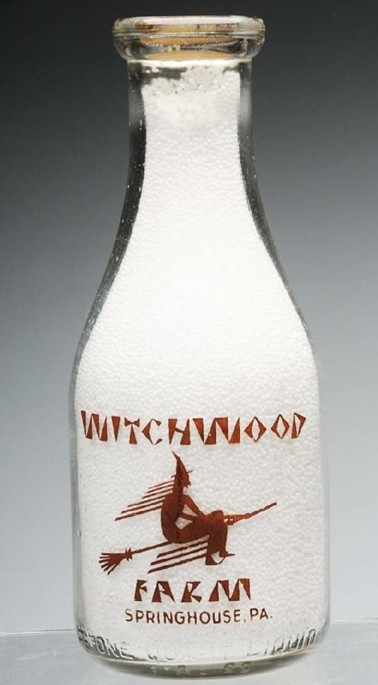
1891 Mardi Gras New Orleans Carnival Krewe of Rex Ball Invitation

1891 Mardi Gras New Orleans Carnival Krewe of Rex Ball Invitation

It’s not hard to imagine escaping to the French Quarter, especially with Ohio’s frenetic winter weather constantly vacillating from sleet to snow to freezing rain and back again.  A warmer climate, some beignets, and all the sights and sounds of Mardi Gras seem awfully appealing!  But I have to content myself with escaping via the database to a Mardi Gras of years past.

Mardi Gras (Fat Tuesday) and the Carnival that accompanies it are celebrated around the world, but no other festivities rival those held in New Orleans.  The full spectrum of Mardi Gras – parades, masquerade balls, parties – has been taking place in New Orleans since the early 1700s, and the memorabilia from these celebrations is very collectible today.  Of course, you can find beautiful masks, but most of the material centers around the krewes and their activities.  A Mardi Gras krewe is a sort of social fraternity (although they sometimes do charitable works as well) with dues-paying members.  Krewes hold the various balls and parades associated with the festivities, and memorabilia from some of the oldest krewes is especially desirable.  Krewe favors, like this silk scarf or a number of jeweled pins, are lovely, but I’m fond of the gorgeous ephemera, like this proclamation for a Mardi Gras king, or the beautiful invitation (pictured above) to a ball that’s reminiscent of illuminated manuscripts.  These objects make it clear that the good times have been rolling in New Orleans for a long, long time!

-Hollie Davis, Senior Editor, p4A.com

To search the Prices4Antiques antiques reference database for valuation information on hundreds of thousands of antiques and fine art visit our homepage www.prices4antiques.com.

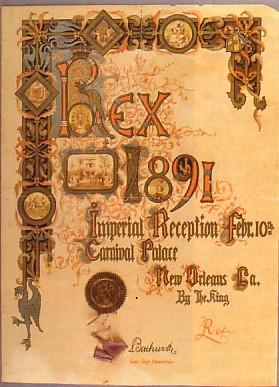
Witchwood Farm milk bottle from Springhouse, PA

Milk makes the world go round at our house.  (Actually, milk does something even more important – allows the world to sleep….)  But then, milk has always made the world go round, I suppose.  When you think about it, the need to keep cattle and to preserve dairy products has dictated where houses were built – pastures were needed for cattle and springs were need to keep milk cool – and driven a number of technological developments from methods of cooling to techniques for killing bacteria and preserving food.  Milk even contributed to the spread of tuberculosis, a disease that was killing humans even in the Neolithic era (although we were most likely lactose intolerant then) and one that later dramatically shaped European culture, influencing even the daily aspects of life like social customs and literature through the 19th century.  (At a recent sale, even a plain glass bottle brought more than $1,000, perhaps in part because it retains the original paper seal announcing that the milk was “tuberculin tested.”)

After Pasteur invented his pasteurization process in 1863, a process that extended the shelf life of milk, the possibility of home milk delivery became much more likely, although milk was not delivered to homes until 1878 in the United States.  Home delivery really took off though after the invention of the glass milk bottle in 1884, but milk bottles were rather expensive to produce, especially with the extra measures of molding a company’s name in the glass.  As the American advertising machine really began to kick into gear in the early 20th century, manufacturers were constantly seeking a cheaper way to create a more eye-catching design, and “pyroglazing” or applied color labeling was what they came up with.  This technique, akin to a silk-screen process, allowed color pigments to be applied to the glass and then fused by heat, and the end result was, especially with a full milk bottle providing a white background, colorful and impressive.

These pyroglazed bottles are, along with traditional milk bottles, still very popular with collectors.  Milk bottles, because they’re usually clearly embossed with a company name and location, often bring the best prices based simply on the location.  Small towns, unusual names, etc., bring strong prices, and the introduction of pyroglazed bottles adds another layer: color and decoration.  My favorite is the one pictured above from Witchwood Farm; the graphic of a witch on her broomstick is great!  Certain colors are less common or retain their hues better and, of course, if the words and picture are especially dramatic or graphic, this can also help the price.  (For instance, this one brought a good price because not only are a variety of colors used, but the farm scene has beautiful detail and is unusual.)  Still, it’s always important to remember condition; lots of chips and scratches or wear to the pyroglazed design can have a big impact on the final price.  Glass milk bottles had a long run from the 1880s to the 1960s (although the current plastic-coated cartons were put into use in the 1930s), so there are plenty out there to pick from, especially at auction.  We just entered a sale that included more than 120 milk bottles, so you can brush up on the current prices before heading out the flea market!

-Hollie Davis, Senior Editor, p4A.com

To search the Prices4Antiques antiques reference database for valuation information on hundreds of thousands of antiques and fine art visit our homepage www.prices4antiques.com.
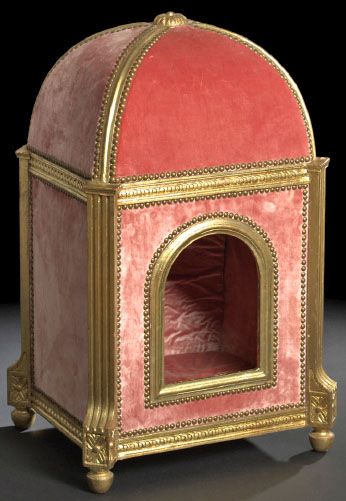
Louis XVI style domed dog's bed/pet house

Louis XVI style domed dog's bed/pet house

In a finer, better world, I’d be a cat, at least one of my cats.  It’s bitterly cold outside with little eddies of snow drifting around the doors, but what are they doing?  Sprawling in front of the stove, soaking up all the heat, looking annoyed whenever I dare to disrupt them in order to crowd in for a moment and warm my hands, after I’ve been outside, hauling in more pellets to feed the object of their addiction.  It’s a pretty cushy life!

Some people’s pets have always lived the good life, based on the things we see come up at auction.  Even in the 19th century, people were pampering their pets, and it’s a good thing my cats don’t know that because, since they’re cats, they already like to convey the impression that they live a life of terrible deprivation.  Perhaps I need to be on the lookout for something luxurious for them, like the little pink velvet house (pictured above), even elevated to prevent it from resting on a cold, drafty floor.  (Although on other days, I think I might just buy a large Victorian birdcage and stuff them all in there so I can get some work done!)  And I’m sure they’d think no dog would be entitled to a dog bed as fancy as this one.  They would, however, leave collars to the dogs, probably even an elaborate alligator skin one.  Sometimes, when I’m laboring away to earn a paycheck so I can keep a roof over their heads and food in their fuzzy, stove-warmed tummies, I do think it might be nice to invest in one of these rare objects.  For instance, an ammonia pistol, traditionally meant to be carried by cyclists to deter dogs, and a little water would certainly liven things up around here!

-Hollie Davis, Senior Editor, p4A.co

To search the Prices4Antiques antiques reference database for valuation information on hundreds of thousands of antiques and fine art visit our homepage www.prices4antiques.com.
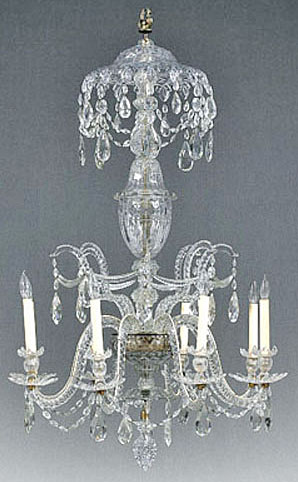
George III Waterford crystal chandelier

George III Waterford crystal chandelier

When you’re bundled up on the couch or out at a big celebration on New Year’s Eve and watching the ball drop, you’re likely to be focused on the mob of people in Times Square or how young Dick Clark still looks (or where all those people go to the bathroom).  Few people focus on the actual ball and the amazing craftsmanship it involves.  That celebrated sphere is about 12′ in diameter and weighs almost 12,000 pounds and a good bit of that mass is Waterford crystal.

Crystal is, by the way, a bit of a misnomer, as glass doesn’t have a crystalline structure.  What we call crystal is more accurately lead glass – sometimes lead crystal – where lead oxide replaces the calcium used in traditional glass and produces an exceptionally bright, clear glass.  This is why it lends itself to the beautiful stemware and chandeliers associated with both crystal and Waterford.  Waterford stemware is generally prolific enough (and often from the modern period) that prices typically run around $10-$20 per piece, but chandeliers are a different story.  Modern chandeliers generally bring less than $1,000, because after all, there are lots of beautiful chandeliers from the 20th century, but a Waterford chandelier from the first years of glass production there (like the one pictured above) can easily cost more than a new car!

The Waterford in question is Waterford, Ireland, a Viking settlement that has grown into one of the country’s largest cities.  Crystal has a long history in Waterford, starting with a glass company formed there in 1783, but while we think of it as a single industry that’s lasted generations, in reality, the company went broke in 1851 and wasn’t reestablished until 1947 when crystal-making was undertaken by a Czech immigrant.  While the factory in Waterford recently closed, Waterford crystal is still manufactured in several European countries, including Germany.  A product produced in a former Viking settlement in Ireland by Czechs – perfect choice for the Crossroads of the World!

Browse all Waterford Crystal in the Prices4Antiques database.

-Hollie Davis, Senior Editor, p4A.com


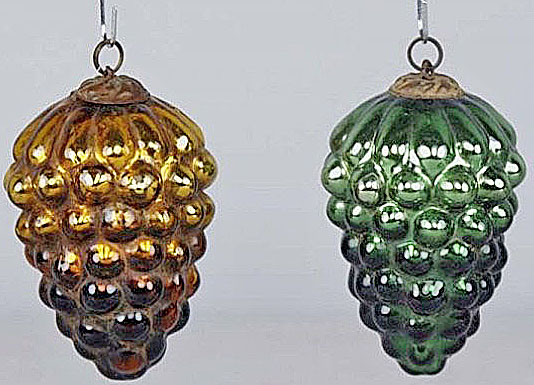
Christmas Kugel ornaments, green and gold grapes

Christmas Kugel ornaments, green and gold grapes

When most people hear the word kugel, they think of the Jewish pudding, but kugel is actually a German word for a ball or a sphere, which is how kugel also came to be the word for early German glass Christmas ornaments.  Christmas kugels appeared around 1840 and probably made great inroads in England and America thanks to Queen Victoria, who made the German version of Christmas that she was raised with fashionable after she took the throne.  Kugels weren’t originally intended to hang on Christmas trees.  Most likely, they were “end of day” pieces made by glass blowers who were simply trying to blow the largest glass bubble possible.  (Many different media forms have “end of day” work – small unique objects made from leftover materials at the end of the day, often as little trinkets or gifts, they’re highly sought after by collectors today who consider them folk art.)  These large glass kugels often hung in doorways and windows rather than on Christmas trees.

When they did make the jump to Christmas ornaments, originally, they were just the very simple glass balls that we think of as traditional Christmas decorations today, but by the 1880s, they were beginning to appear in a variety of forms: grape clusters (like the ones pictured above), teardrops, pinecones, etc.  Molten glass was blown into a mold and then broken off at the neck.  The jagged edge of the neck was smoothed down so a little metal cap with a hook could be applied – the same design we see today.

Because of their ephemeral nature and because they were handled so frequently, early Christmas kugels didn’t survive in great numbers, so they’re very collectible today.  The challenge is accurately assessing their age.  And German glass ornaments were a staple of Christmas decorations until well into the 20th century, so if you’re looking for something more than the basic globe, you’ll not be disappointed.  You’ll find clowns, dogs, Indians, Santas and even beetles!  So take a close look when you’re unpacking those ornaments that have been passed down through your family – you might find some real surprises on your tree as well as under it!

-Hollie Davis, Senior Editor, p4A.com

To search the Prices4Antiques antiques reference database for valuation information on hundreds of thousands of antiques and fine art visit our homepage www.prices4antiques.com.
« Older entries § Newer entries »
